February 10, 2026
2026 Point-in-Time Count: Seeing our Unhoused Community Members
By Dr. Shelby Feliciano-Sabala, Chief Partnership Officer
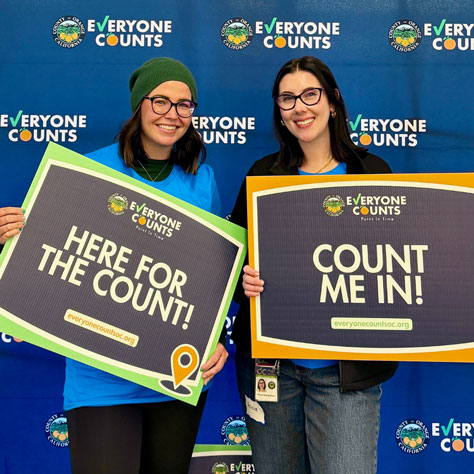
What is the PIT count?
The Point in Time (PIT) count is an annual census performed across the United States for people experiencing homelessness (living unsheltered on the streets and/or in shelters) mandated by the federal Housing and Urban Development Agency (HUD). However, what PIT misses and continues to miss is counting the 32,000+ students experiencing homelessness in Orange County as defined by the federal McKinney Vento act which is not currently recognized by HUD.
Every January, on a designated day/week, volunteers go out into their communities in teams to count and survey individuals experiencing homelessness and learn more about their demographics, reasons for falling into homelessness, and health or ability concerns.
From a systems lens, PIT is important because it shows the depth and breadth of homelessness. The data collected allocates public funding for homelessness services in Orange County and in communities across the country. From a human lens, it offers the opportunity for people who may not have personal experience of homelessness to get a glimpse of what it is like to live unsheltered, on the street. It is an opportunity to increase empathy and grace for our people who may have had unforeseen circumstances disrupt
their lives.
Orange County conducts the PIT count every other year. Learn more here.
My experience
I was in graduate school the last time I participated in the PIT count. Thanks to my recent appointment to the Orange County Continuum of Care Board (OC CoC), I was motivated to take part in this opportunity to support Orange County’s 2026 PIT count.
I volunteered for the 3:30am shift on Tuesday January 27th. It was a cold morning (cold for Southern California), about 42 degrees or so; I was bundled up in a beanie, long sleeve shirt, warm boots, and a jacket. All I kept thinking while I was walking and driving from stop to stop was how lucky I was to be warm.
When I arrived, I was greeted by friendly volunteers comprised of community members and fellow nonprofit colleagues. I was teamed up with Andrew Crowe, our partner at Scholarship Prep and fellow OC CoC board member, another Scholarship Prep staff, and a City Net staff who served as our team captain. We were given a map of the Central Service Planning Area and were told to target key spots in Santa Ana. Our team developed a game plan: we would start in the south then, when the sun rose, make our way towards First Street and Minnie Street. We would also focus on train tracks and train stations.
We looked for people sleeping outside. We checked the neighboring blocks, shopping centers, alleyways, behind dumpsters, and train tracks. When we saw someone sleeping outside, we got out of the car as a team and announced ourselves politely, saying good morning, letting them know we were doing a survey, and asking if they wanted to participate.
We offered a hygiene and food bag and a $10 gift card once they finished the survey. The survey takes about 5 minutes and collects their demographic information, veteran history, disabilities, substance use, reasons for experiencing homelessness, and time they have experienced homelessness. If they are sleeping or do not wish to participate, we left a bag of food and hygiene and counted with a short demographic survey based on what we are able to see and guess: basic information including age, ethnicity, and gender
Stories behind homelessness
During the conversation with our survey participants, I was struck by how honest and open people were. I spoke with 3 women and many men. Every woman I spoke to was on the street because of relationship challenges, whether domestic violence or family issues. All the women were with a small group of men whereas we spoke to some men who were alone. People spoke about their physical or intellectual disabilities, job loss, HIV, using substances, lack of family support, and looking for employment or school opportunities.
We met a man that reminded me of my stepdad who himself fell into homelessness a few years ago. I was struck by this man’s story; he shared his experience with job loss before COVID and not being able to find his footing since then. He was a substance user, just like my stepdad, and I couldn’t help but see his shame yet at the same time, his optimism that things weren’t that bad even though he had been living on the streets for several years.
It was hard for me to imagine this man’s life as I wondered if this is how others doing the PIT in another city may have seen and interacted with my stepdad. What did they think of my stepdad or his story? When I spoke with this man who literally had nothing to his name – no family ties, no employment – yet he was filled with a palpable sense of optimism. I was filled with empathy and love both for this man and my stepdad who recently passed away and at the time was still experiencing homelessness.
Homelessness is not a personal choice
Homelessness is failure of systems, not a personal choice, especially when we think about our kids. The systems that are meant to help those in need cannot comprehensively care for and support multiple issues at once because they work in isolation instead of in collaboration.
Picture this: You receiving medical from one system, housing from another, mental health or substance abuse support from another, and employment or school from another, none of these systems are collaborating or seeing other warning signs that another can identify. It is hard to navigate systems and even harder to experience homelessness.
I last wrote about the Orange County’s PIT count here.
Since 2024, the data and stories provided by the PIT count remain important. Yes, there are flaws and gaps in the process, especially in counting youth and families (like those supported by Project Hope Alliance), but there is also the crucial need for a PIT from both a systems and humanity perspective.
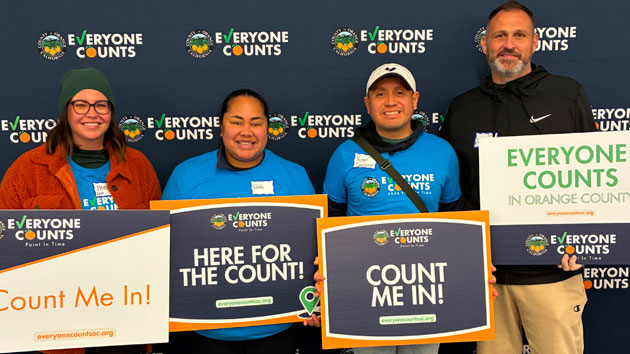
Homelessness is not inherently scary. Our unhoused community members experiencing homelessness are just trying to survive and do their best to live one day at a time. Having the opportunity to speak with them, hear their stories, and create a multifaceted and human picture of the challenge is crucial and helps create an actionable path forward to one day eliminating homelessness.
I hope you will have the opportunity to take part in our next Point-in-Time Count; we would all have much more empathy and grace for each other because we all experience hard times.
Click here to learn more about the national Point-in-Time effort.